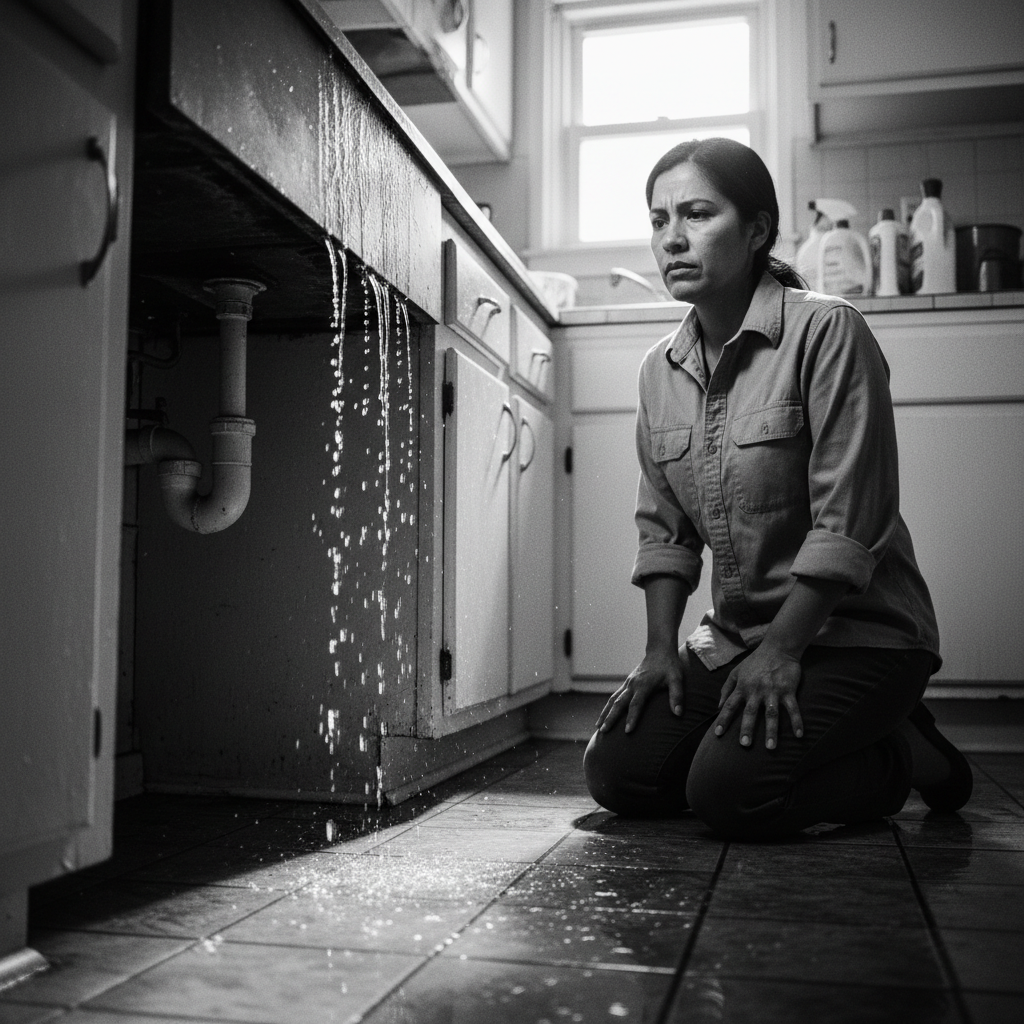
Plumbing emergencies have a way of showing up at the worst possible moment.
It’s never a Tuesday afternoon when you’re home with nothing going on.
It’s always a Sunday night. Or the morning of a holiday. Or right before company shows up.
Knowing what to do in the first 60 seconds can be the difference between a quick fix and thousands of dollars in water damage.
Here are the 7 most common plumbing emergencies β what causes them, what to watch for, and exactly how to handle each one.
1. Clogged Toilet
It’s the most common plumbing emergency there is.
You flush β and instead of draining, the water starts rising.
Nine times out of ten, a clogged toilet happens because something got flushed that shouldn’t have. Paper towels, baby wipes, feminine hygiene products, too much toilet paper β none of that breaks down the way toilet paper does.
What to do right now: Turn off the water supply valve behind the toilet (the small oval knob near the base). This stops the bowl from overflowing. Then call a licensed plumber to clear the clog before it gets worse.
Don’t keep flushing hoping it clears. It won’t β and you’ll make the mess bigger.
2. Burst Pipe
A burst pipe can dump hundreds of gallons of water into your home in minutes.
Cold weather, old pipes, and water pressure spikes are the usual causes. You might first notice a sudden drop in water pressure, a wet spot on your ceiling or wall, or the sound of water running somewhere it shouldn’t be.
What to do right now: Find your main water shutoff valve and turn it off immediately. In most homes it’s near the water meter, in the basement, or outside near the foundation. Then call 866-486-7454 for emergency plumbing service β 24 hours a day.
Every minute counts. Water damage compounds fast.
3. No Hot Water
You turn on the shower and get nothing but cold water.
A failed water heater isn’t just an inconvenience β in some cases it’s a safety issue. A leaking water heater, a faulty gas valve, or a broken pressure relief valve can all become dangerous if ignored.
What to do right now: Check whether the pilot light is out (on gas heaters) or whether your circuit breaker tripped (on electric heaters). If neither of those fixes it, or if you smell gas near the unit, leave that alone and call a plumber immediately.
Don’t try to mess with a gas water heater yourself. It’s not worth it.
4. Sewer Line Backup
This one is the worst one on the list β and the most expensive to ignore.
When your main sewer line backs up, waste has nowhere to go. You’ll notice it first as a foul smell inside the house, or multiple drains backing up at the same time. Left untreated, sewage can back up through your floor drains, showers, and toilets.
What to do right now: Stop using all water in the house immediately. Don’t flush, don’t run the dishwasher, don’t do laundry. Call a plumber right away β this is not a wait-until-Monday situation.
A sewer backup is a health hazard. Treat it like one.
5. Overflowing or Constantly Running Toilet
A toilet that runs constantly isn’t just annoying β it can add hundreds of dollars to your water bill every month.
The most common culprit is a worn-out flapper valve inside the tank. Water leaks past it continuously, forcing the fill valve to keep running. You can test it by dropping a little food coloring in the tank β if it shows up in the bowl without flushing, your flapper is leaking.
What to do right now: Turn off the supply valve behind the toilet to stop the water waste. A plumber can replace the internal tank hardware quickly and cheaply β usually in under an hour.
6. Broken Washing Machine Hose
Most homeowners don’t think about their washing machine hoses until one bursts.
Those rubber hoses are under constant pressure and degrade over time. The recommended replacement interval is every 3-5 years β most people never do it. When a hose lets go, it can flood a laundry room in minutes.
What to do right now: Turn off the hot and cold water supply valves directly behind the washing machine. Mop up what you can and call a plumber to replace the hoses. Consider upgrading to braided stainless steel hoses β they last much longer and are less likely to fail.
7. Water Main Break
Your home’s main water line handles serious pressure β typically 40 to 80 PSI pushing water into every faucet, toilet, and appliance in your house.
When it fails, you lose water pressure throughout the entire home. Sometimes you’ll see wet spots in your yard, hear rushing water under the floor, or notice your water meter spinning when nothing is running.
What to do right now: Shut off the main water supply at the meter and call a licensed plumber immediately. A water main break is not a DIY repair β it requires professional equipment to locate and fix the line without making things worse.
The Bottom Line
Plumbing emergencies don’t wait for a convenient time.
They happen on Sunday nights, on holidays, and right before you have guests coming over.
The best thing you can do is know exactly what to do in the first 60 seconds β and have a number you can call that actually answers.
Near Me Plumbing Pros is available 24 hours a day, 7 days a week.
Live answer. No voicemail. No callback forms.
Call 866-486-7454 the moment a plumbing emergency hits β and we’ll connect you with a licensed local plumber fast.
Need emergency service in your area? Near Me Plumbing Pros connects you with licensed plumbers available 24/7 β wherever you are.
