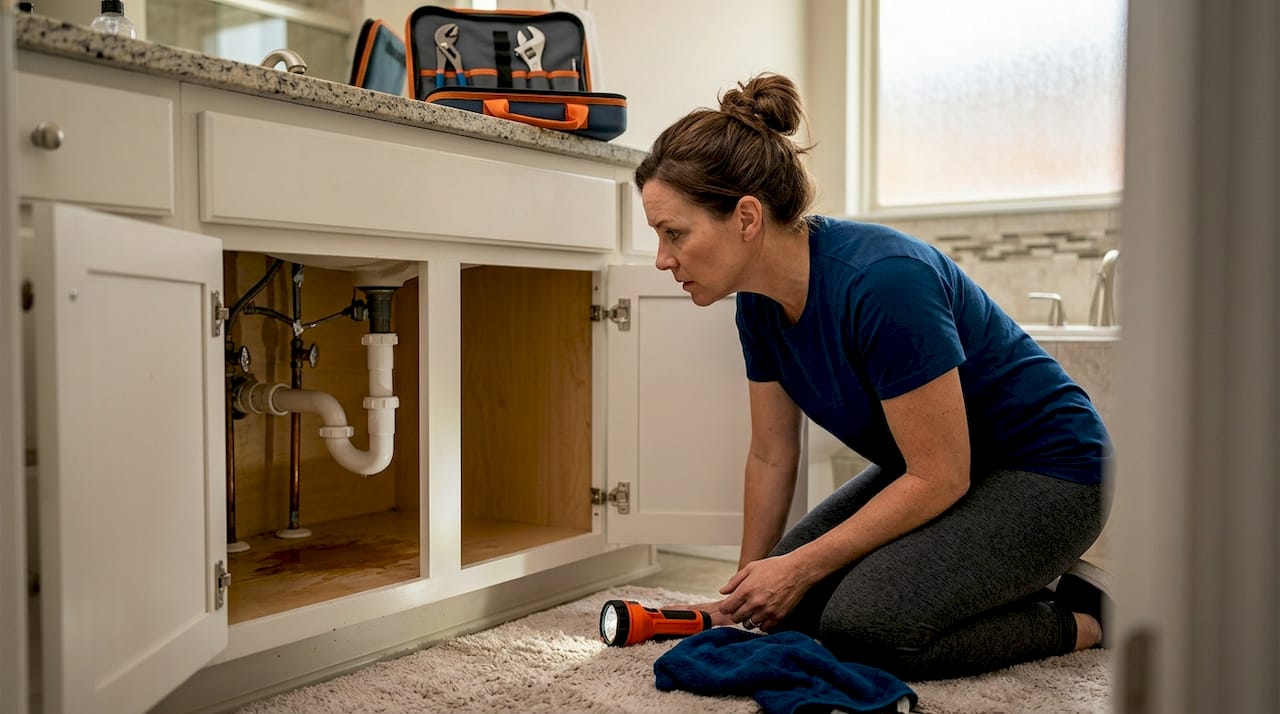
Emergency plumbing checklist: Fast action steps for homeowners

Homeowner inspecting kitchen plumbing leak

Water spreading across your kitchen floor at midnight, a toilet overflowing with no sign of stopping, or a pipe that suddenly bursts behind your wall — these moments demand fast, clear-headed decisions. The difference between a $500 repair and a $15,000 restoration often comes down to what you do in the first five minutes. This guide gives you a proven, step-by-step emergency plumbing checklist so you can act with confidence, limit damage to your home, and have the right information ready when you call a professional.

Table of Contents

Key Takeaways

Point Details
Shut off water quickly Stopping the water source limits damage and is always your first move.
Contain and remove water Fast action with towels, buckets, and moving valuables prevents further home damage.
Stay safe with electricity Always turn off power if water or sewage reaches electrical outlets or devices.
Document and call pros Providing photos and information gets you faster, better emergency help.

How to identify a plumbing emergency

Not every plumbing problem is a crisis. A slow drain in the guest bathroom or a faucet that drips once a minute can wait for a scheduled appointment. But some situations demand immediate action, and hesitating even a few minutes can multiply repair costs dramatically.

True plumbing emergencies include:

  • Active water leaking or spraying from a pipe, fixture, or appliance
  • Sewage backing up into sinks, tubs, or toilets
  • Flooding in any room, especially near electrical outlets or appliances
  • A sudden and complete loss of water pressure throughout your home
  • Visible water stains spreading rapidly across ceilings or walls
  • A strong sewage smell with no obvious isolated source

What is NOT an emergency:

  • A single dripping faucet that has been dripping for days
  • A slow drain in one sink with no backflow
  • A running toilet that flushes normally
  • Low water pressure in one fixture only

The key distinction is speed and spread. If water is actively moving, spreading, or backing up, you are dealing with an emergency. If it is a nuisance that has been stable for days, it can wait for a regular appointment.

“If sewage backup is happening, homeowners should stop using water immediately and call a licensed professional for anything beyond the smallest isolated clog.”

Knowing when to call a plumber is one of the most underrated homeowner skills. Acting too late is the most common and most expensive mistake people make. If you are unsure whether your situation qualifies, it is always safer to reach out to 24-hour plumber services and describe what you are seeing.

Pro Tip: If you can hear water running but cannot find the source, check under sinks, behind toilets, in the basement, and near your water heater. Water travels along pipes and joists, so the wet spot you see is often not where the leak started.

Emergency action checklist: Step-by-step

Once you confirm you are dealing with a real emergency, speed and order matter. Doing things out of sequence — like trying to mop up water before shutting off the source — wastes precious minutes. Follow this checklist in order.

Step-by-step emergency response:

  1. Locate and shut off the water source. If the problem is isolated to one fixture (toilet, sink, washing machine), turn the shutoff valve behind or beneath that fixture clockwise until it stops. If you cannot find it or the problem is a main line issue, go directly to the main water shutoff valve, usually located near the water meter, in the basement, or in a utility closet.
  2. Turn off the water heater. If you shut off the main supply, turn off your water heater too. Running a water heater without water can damage the tank or heating elements.
  3. Assess the electrical risk. Look at where water has spread. If it is near any outlets, appliances, or your electrical panel, do not touch anything electrical until power is off.
  4. Cut power if needed. Go to your breaker box and switch off the circuit for the affected area. If water is already near the breaker box, leave the house and call an electrician before re-entering.
  5. Contain the water. Lay down towels, use buckets under active drips, and block doorways with rolled towels to keep water from spreading to dry areas.
  6. Remove valuables and electronics. Move rugs, furniture, electronics, and important documents out of the wet zone as quickly as possible.
  7. Open windows and doors if safe. Ventilation slows mold growth, which can begin in as little as 24 to 48 hours in wet conditions.
  8. Call an emergency plumber. Do not wait to see if the situation improves on its own.

“In a plumbing emergency, the first priority is stopping water flow by shutting off the appropriate shutoff valve — the fixture valve if isolated, otherwise the main water shutoff.”

“If sewage or flooding reaches electrical outlets or appliances, cut power to the affected area at the breaker box, or call an electrician if you cannot do it safely.”

Situation First shutoff action Escalation step
Toilet overflowing Turn valve behind toilet Plunger, then call plumber
Sink spraying water Turn valve under sink Call plumber if valve fails
Burst pipe in wall Main shutoff immediately Call plumber and document
Sewage backup in tub Stop all water use Call plumber, do not flush
Flooding near outlets Main shutoff + breaker Call plumber and electrician

These emergency plumbing actions are straightforward when you practice them ahead of time, but they can feel overwhelming in the middle of a crisis. Walk through your home this week and locate every shutoff valve so you are not searching during an emergency.

Contain damage and protect your home

Shutting off the water source is step one, but water that is already on the floor keeps causing damage every minute it sits there. Flooring, subfloor, drywall, and insulation all absorb moisture quickly. The goal during this phase is to limit how far the water travels and how long it stays in contact with your home’s materials.

Practical containment steps:

  • Soak up standing water immediately. Use old towels, mops, or a wet/dry vacuum. Do not leave standing water unattended even for 10 minutes.
  • Block doorways. Roll up towels or use folded blankets to create barriers at doorways and prevent water from reaching carpeted rooms or adjacent spaces.
  • Elevate furniture and appliances. Slide furniture legs onto aluminum foil or plastic bags to prevent staining and warping. Move small appliances to dry surfaces.
  • Check corners and crevices. Water collects in low spots and behind baseboards. Use a flashlight to check areas you might overlook. Moisture trapped behind baseboards leads to mold within days.
  • Avoid using contaminated water. If the source is sewage or gray water from a washing machine drain, treat it as a biohazard. Do not touch it with bare hands and do not let children or pets near it.
  • Ventilate the space. Open windows and run fans if you have them. Do not use a regular household vacuum on standing water.

Every minute of water contact with wood, drywall, or carpet increases the likelihood of structural damage and mold. According to water damage prevention best practices, mold can begin colonizing wet surfaces in as little as 24 hours, so fast drying is not optional.

A practical homeowner’s first five minutes should follow this flow: shut off water and power if needed, stop adding water, contain and remove standing water, then document and call an emergency plumber.

Man turning basement water shutoff valve

Pro Tip: Set a 10-minute timer the moment you start containment. Use that window to soak up water, block doorways, and move valuables. When the timer goes off, stop containment and shift your focus to documentation and calling a plumber. Spending more than 10 minutes on containment without calling for help is one of the most common delays homeowners create for themselves.

Document, communicate, and expedite repairs

Once the immediate threat is contained, your next job is to create a clear record of what happened. This step feels less urgent than mopping up water, but it directly affects how fast a plumber can help you, how smooth your insurance claim goes, and whether you avoid repeat visits.

What to document:

  • A written description of what happened and when it started
  • The exact location of the problem (which room, which fixture, which wall)
  • What steps you have already taken (shutoff valve closed, power off, etc.)
  • Photos and video from multiple angles, including wide shots showing the full area and close-ups of the source
  • Any visible damage to floors, walls, ceilings, or belongings
  • The make and model of any appliance involved (water heater, washing machine, dishwasher)

Good documentation helps a plumber prioritize and reduce delays by giving them a clear picture before they arrive. It also protects you if there is any dispute about the scope of damage.

Scenario Documented homeowner Undocumented homeowner
Insurance claim processing 3 to 5 days average 2 to 4 weeks average
Plumber arrival preparation Arrives with right parts May need second trip
Dispute resolution Clear timeline available Relies on memory
Repair cost estimate accuracy Higher accuracy Frequent surprises

When you call a plumber, lead with the most critical facts: what is happening, where it is, whether the water is off, and whether there is any electrical risk. Avoid long explanations of the history of your plumbing. Dispatchers and plumbers need the current situation, not background. Use your emergency repair checklist notes to give a fast, accurate summary.

For insurance, call your provider as soon as possible after calling a plumber. Most homeowner policies cover sudden and accidental water damage, but they require prompt notification. Waiting days to report can complicate or reduce your claim.

What most emergencies teach us: Lessons the checklist can’t replace

Here is something most plumbing guides will not tell you: the checklist is the easy part. The hard part is staying calm enough to use it.

We have seen homeowners who knew exactly where their main shutoff valve was, but froze for several minutes because the sound of rushing water inside a wall is genuinely terrifying. We have also seen homeowners who had never thought about plumbing a day in their lives, but calmly walked through every step because they had practiced it once during a home inspection walkthrough. The difference was not knowledge. It was composure.

The single most underrated homeowner skill is knowing your home’s plumbing layout before anything goes wrong. Walk through your home and find every shutoff valve. Label them with a permanent marker or a piece of tape. Know where your main shutoff is and make sure every adult in your household knows too. This takes about 20 minutes and could save you thousands of dollars.

Pro Tip: Teach every family member, including teenagers, where the main water shutoff valve is and how to turn it off. A burst pipe at 2 AM while you are traveling is far less catastrophic if someone at home knows what to do without calling you first.

Real plumbing repair scenarios consistently show that the most expensive outcomes come from inaction, not from the original problem. A pipe that bursts and gets shut off in two minutes causes a fraction of the damage of the same pipe that runs for 20 minutes while someone searches for the valve or waits to see if it stops on its own.

Checklists beat panic every time, but they work best when you have a mental foundation underneath them. Know your home. Know your limits. And know that calling a professional quickly is never the wrong move.

Need emergency help? Fast connections to local plumbers

When the situation moves faster than your checklist, you need a professional on the line right now.

https://nearmeplumbingpros.com

At Near Me Plumbing Pros, we connect homeowners with trusted, licensed local plumbers who are available around the clock. Whether you are dealing with a burst pipe, a sewage backup, or flooding you cannot get under control, the right help is closer than you think. Find a plumber near you in seconds and get connected to someone who can respond fast. For situations that cannot wait until morning, our 24-hour emergency plumber network is always ready. Do not let a containable problem become a full restoration project. Get to emergency plumbing repairs help now.

Frequently asked questions

What should I do first in a plumbing emergency?

Immediately shut off the nearest water source, or go straight to the main valve if you cannot find the fixture shutoff, then contain water and call a professional. The first priority is stopping water flow before anything else.

When should I turn off electricity during a plumbing leak?

If water or sewage reaches any outlets, appliances, or your electrical panel, cut power at the breaker box right away. If flooding reaches electrical outlets, call an electrician if you cannot safely reach the breaker.

What types of plumbing problems require immediate professional help?

Sewer backups, burst pipes, and any flooding near electrical sources require fast professional intervention. Stop all water use immediately during a sewage backup and call a licensed plumber right away.

How can I prevent further damage while waiting for a plumber?

Contain and remove standing water using towels or a wet/dry vacuum, elevate furniture and valuables off wet floors, block doorways to dry areas, and document everything with photos and video before cleanup begins.

Does insurance require documentation of a plumbing emergency?

Yes, most insurers require prompt reporting with a clear timeline and photos. Documenting key details including what happened, steps you took, and photos of affected areas speeds up claims and reduces disputes.

Article generated by BabyLoveGrowth

Call Now